
Skip to main content Accessible Version
Sleep Apnea Treatment
Get the Restful Sleep You Need

Don't allow sleep apnea and restless nights to dictate your life. We have solutions!

Sleep Apnea Treatment | Dentist
Let's Find the Right Sleep Apnea Solution for You
Get Started Today

Sleep Apnea Treatment

Obstructive sleep apnea (OSA) is a condition in which the airway becomes partially or fully blocked during sleep. During sleep, the muscles in the throat relax, allowing soft tissue to collapse backward and cut off the airway.

This blockage causes you to stop breathing before your body partially wakes itself to resume breathing. These episodes can occur hundreds of times a night, and most people have no memory of them.

What About Snoring?

Snoring and sleep apnea are closely related. Snoring happens when air is forced through a narrowed airway. Not everyone who snores has sleep apnea, but snoring, especially loud, chronic snoring, is a common sign.

Signs You May Have Sleep Apnea

Many people live with symptoms for years without connecting them to a sleep disorder. Common signs include:

  • Loud or chronic snoring
  • Waking up gasping or choking
  • Excessive daytime fatigue, even after a full night of sleep
  • Morning headaches
  • Difficulty concentrating or memory problems
  • Irritability or mood changes
  • Frequent nighttime urination
  • Dry mouth or sore throat in the morning
The Benefits of Treating Sleep Apnea

Getting treatment for sleep apnea can change your life in ways that go far beyond a better night's sleep.

Protect Long-Term Health

Untreated sleep apnea puts serious strain on your heart and other organs over time. Treatment can reduce your risk of high blood pressure, heart disease, stroke, and type 2 diabetes, all conditions directly linked to untreated OSA.

Wake Up Feeling Rested

When your breathing is no longer interrupted throughout the night, your body can complete the sleep cycles it needs to recover and recharge. Many patients notice a significant improvement in energy and daytime alertness once treatment begins.

Think Clearly, Feel Better

Sleep deprivation affects your mood, memory, and concentration. Treating sleep apnea can reduce irritability, improve focus, and lower the risk of accidents caused by daytime drowsiness, making daily life safer and more manageable.

Frequently Asked Questions

You can expect the following steps during a dental office sleep apnea screening:

Step 1: Initial Evaluation

Your dentist will start by asking about your symptoms, sleep habits, and overall health. This discussion includes:

  • How often you snore or wake up during the night
  • Whether you feel rested after a full night of sleep
  • Relevant medical conditions, such as high blood pressure, diabetes, or obesity, are commonly associated with OSA
  • Any medications you are currently taking

Step 2: Oral and Airway Examination

Your dentist will examine your mouth, jaw, and throat for physical signs that may contribute to airway obstruction during sleep. This may include evaluating:

  • The size and position of your tongue and tonsils
  • The width and shape of your palate
  • Your jaw structure and bite
  • Overall muscle tone in the mouth and throat area

Step 3: Dental Imaging

Dental imaging can provide a clearer picture of your airway and jaw structure, helping your dentist identify factors that may be contributing to obstruction during sleep.

Step 4: Referral and Coordination

A dental screening alone cannot diagnose sleep apnea. If your screening suggests a significant risk, your dentist will coordinate with your primary care physician or sleep specialist to determine the most appropriate treatment plan for your situation.

Is Sleep Apnea Affecting Your Health?

If you have been experiencing symptoms you can't explain, a screening is a simple, no-pressure first step. Call Parker Family Dentistry today at (574) 753-4542 to schedule a consultation and find out whether sleep apnea treatment in Logansport, IN, may be right for you.

Sleep Apnea Treatment Options

Oral Appliance Therapy

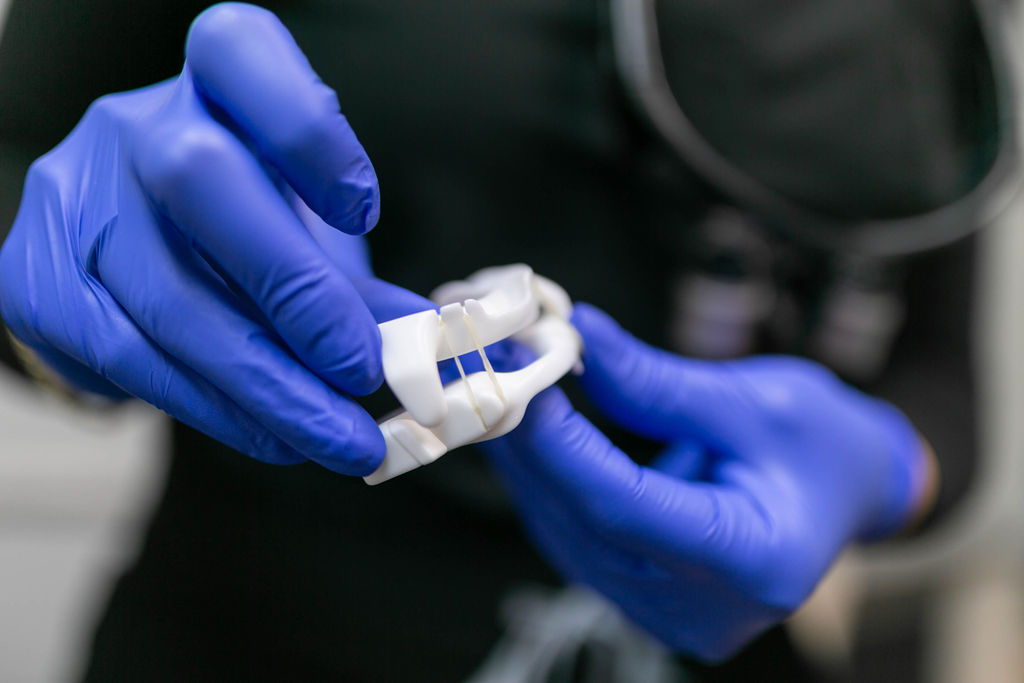
A mandibular advancement device (MAD) is a custom-fitted oral appliance that repositions the lower jaw slightly forward during sleep. This helps keep the airway open and can reduce or eliminate apnea episodes.

The device fits over your teeth similar to a mouthguard, and most patients tolerate them well. A MAD is appropriate for mild to moderate sleep apnea and is an alternative for patients who cannot tolerate CPAP therapy.

What About CPAP?

CPAP (Continuous Positive Airway Pressure) is still the most effective treatment for severe sleep apnea. If you have been diagnosed with severe OSA, CPAP will likely still be part of your treatment.

However, if you have mild to moderate sleep apnea or find CPAP difficult to tolerate, an oral appliance may be appropriate. Our dentists will be upfront about what is and is not suitable for your situation.

Meet Our Doctors:

Dr. Esi Parker
General Dentist

Originally from Brooklyn, New York, Dr. Esi Parker completed her undergraduate studies at Fordham University before attending graduate dental school at Midwestern University in Chicago, where she received her doctorate. She's a caring, dedicated dentist ...

Dr. Travis Parker
General Dentist

Dr. Travis Parker is a friendly and highly skilled dentist who grew up in North Dakota. He achieved his Bachelors in Biology at Dickinson State University in his home state before graduating from dental school ...

Take the First Step Toward Better Sleep

If you have been living with symptoms of sleep apnea, or if you have a CPAP machine that you cannot tolerate, you don't have to let these situations dominate your life.

Call Parker Family Dentistry in Logansport, IN, at (574) 753-4542 so we can help you schedule a convenient consultation.

Get Restful, Rejuvenating Sleep
Book a Consultation